Customer Disruption Management Handling
Defining the vision of Customer Disruption Management Handling System at tiket.com
Product Designer & Researcher
Background
To support company initiatives, we set out to improve the customer disruption management experience by addressing critical gaps from both user and system perspectives (product and operational models) at tiket.com.
This includes auditing and analyzing how disruptions are currently identified, handled, and communicated, while uncovering opportunities to better support future product and feature roadmaps.
Problem
Customer disruption handling today is fragmented and reactive. Issues are often treated as isolated operational incidents, without a unified system or clear end-to-end ownership.
As a result:
- Customers experience confusion, uncertainty, and loss of trust
- Internal teams face inconsistency in handling and communication
- Opportunities for proactive resolution and system-level improvements are missed
Vision / Direction
As a team, we defined a clear vision for Customer Disruption Management, shifting from reactive issue handling to a more structured and experience-driven approach.
When disruptions happen, customers don’t see “operational issues”, they feel uncertainty.
Therefore, disruption handling should not only focus on resolution, but on managing the entire customer experience during critical moments.
This project aims to establish a unified Customer Disruption Management system, one that delivers:
- Clarity in communication
- Speed in resolution
- Consistency across the end-to-end journey
Interview
Firstly we conducted interviews with our internal team (Customer Service at tiket.com), who handle customer requests, complaints, and inquiries, to better understand the most common user issues.
Here are the key findings we got during the interview:
- Hotel overbooking issues.
- Hotel facilities that do not match the product details.
- Users not receiving information regarding flight reschedules or cancellations from airlines.
- Users who have successfully paid for hotel or flight bookings but did not receive their e-tickets.
To further validate these insights, we analyzed complaint data collected from the Customer Service team too.
Complaint List
The data below highlights the top 10 complaint categories, which account for 50.4% of total complaints on tiket.com.
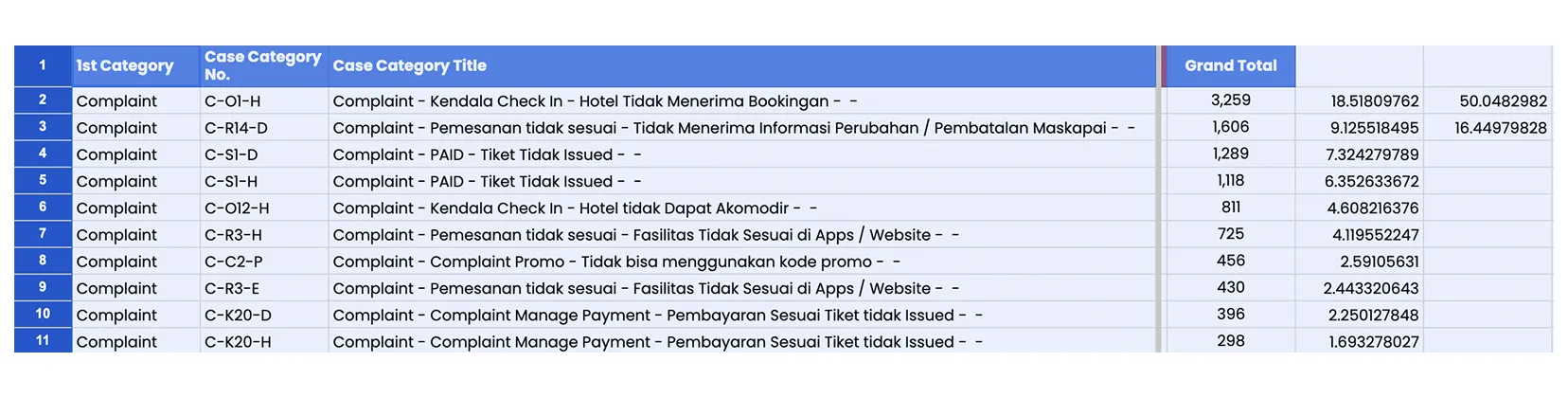
And we also mapping / illustrated the current flow of how customer issues are handled at tiket.com.
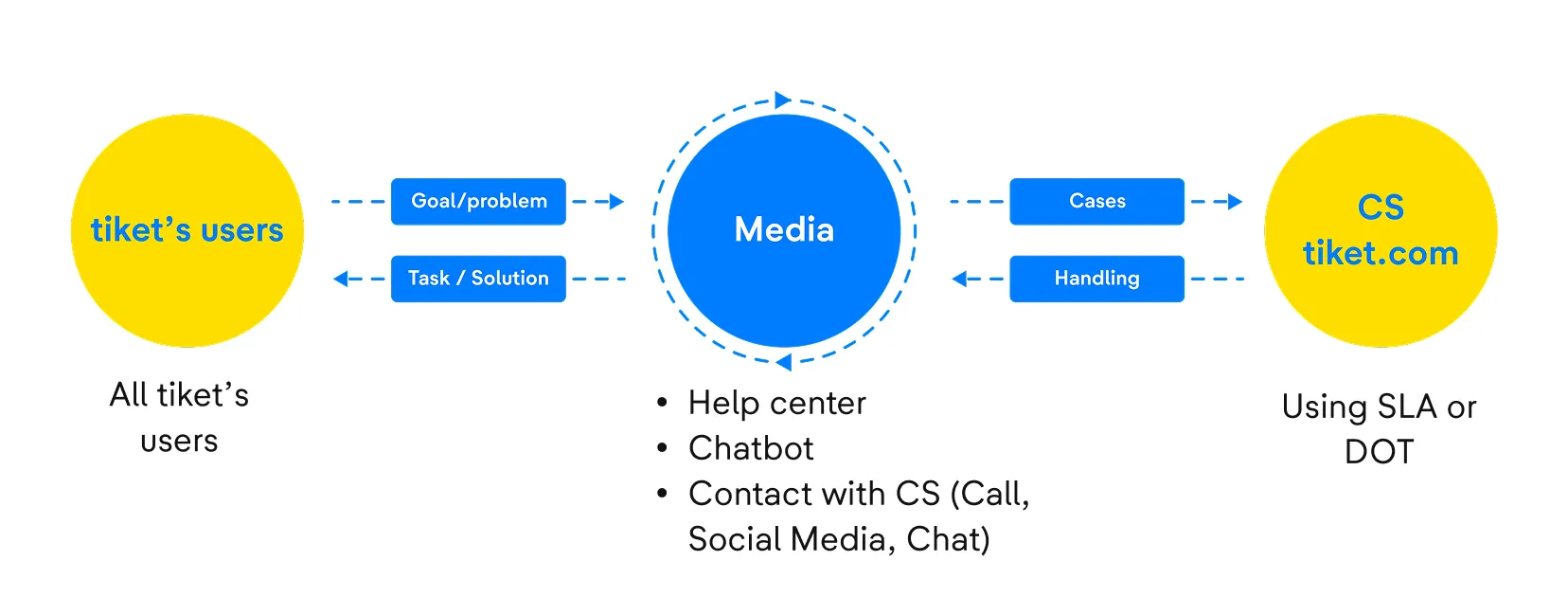
This illustrates the current flow of how customer issues are handled at tiket.com.
To get more clarity & to manage expectations from our internal team, we also asked about expectations from the Customer Service team.
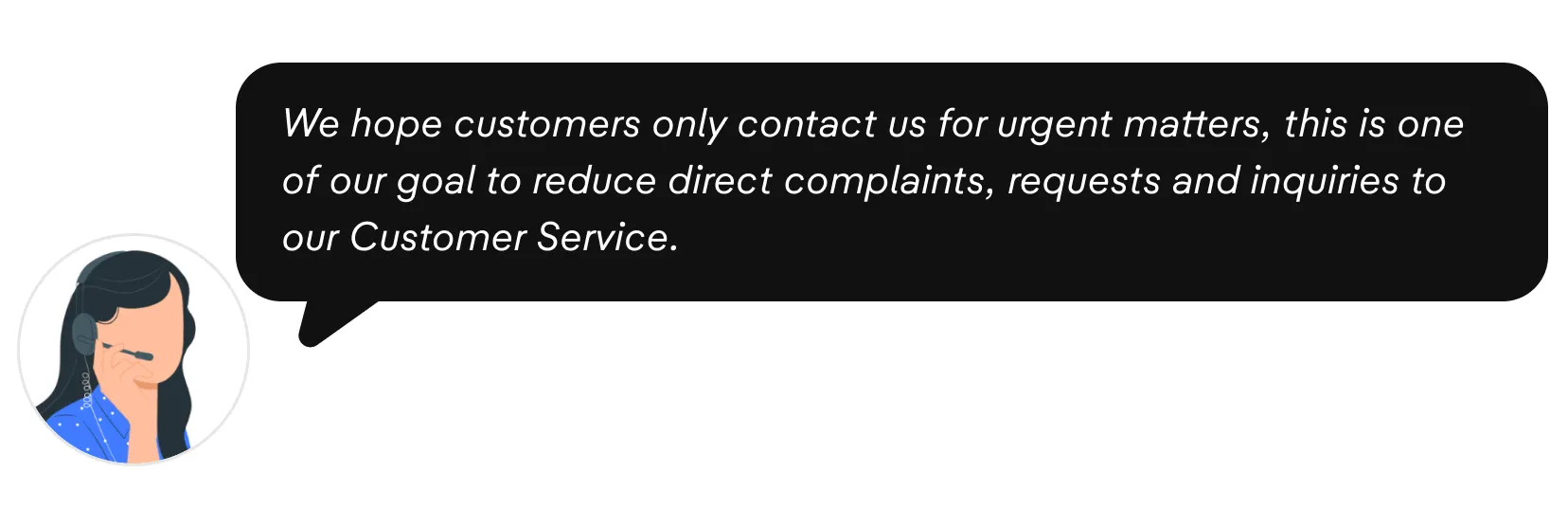
Ideally, customers should only reach out for urgent matters. Reducing direct complaints, requests, and inquiries to Customer Service has become one of our key goals.
Key Findings & Opportunity Areas
Based on interviews with the Customer Service team, we gained a clearer understanding of how a Customer Disruption Management Handling System should work.
However, several key gaps were identified:
- Customers lack awareness and clarity on when to contact Customer Service versus reaching out to vendors.
- There is no clear classification of urgency levels across complaints, requests, and inquiries.
These gaps lead to unnecessary escalations, increased operational load, and a fragmented customer experience.
To address these challenges, we needed to move beyond reactive handling and start designing a more structured, proactive system.
Instead of treating each issue as an isolated case, we aimed to rethink how disruptions are classified, communicated, and resolved across the entire journey.
Proposed Solution
To move towards this vision, we took the following steps:
- Conducted in-depth interviews with the Customer Service team to deeply understand patterns across complaints, requests, and inquiries.
- Collaborated with Flight and Hotel teams to align on disruption scenarios, constraints, and handling processes.
We want to focus to hotel & flight, because this 2 bgis
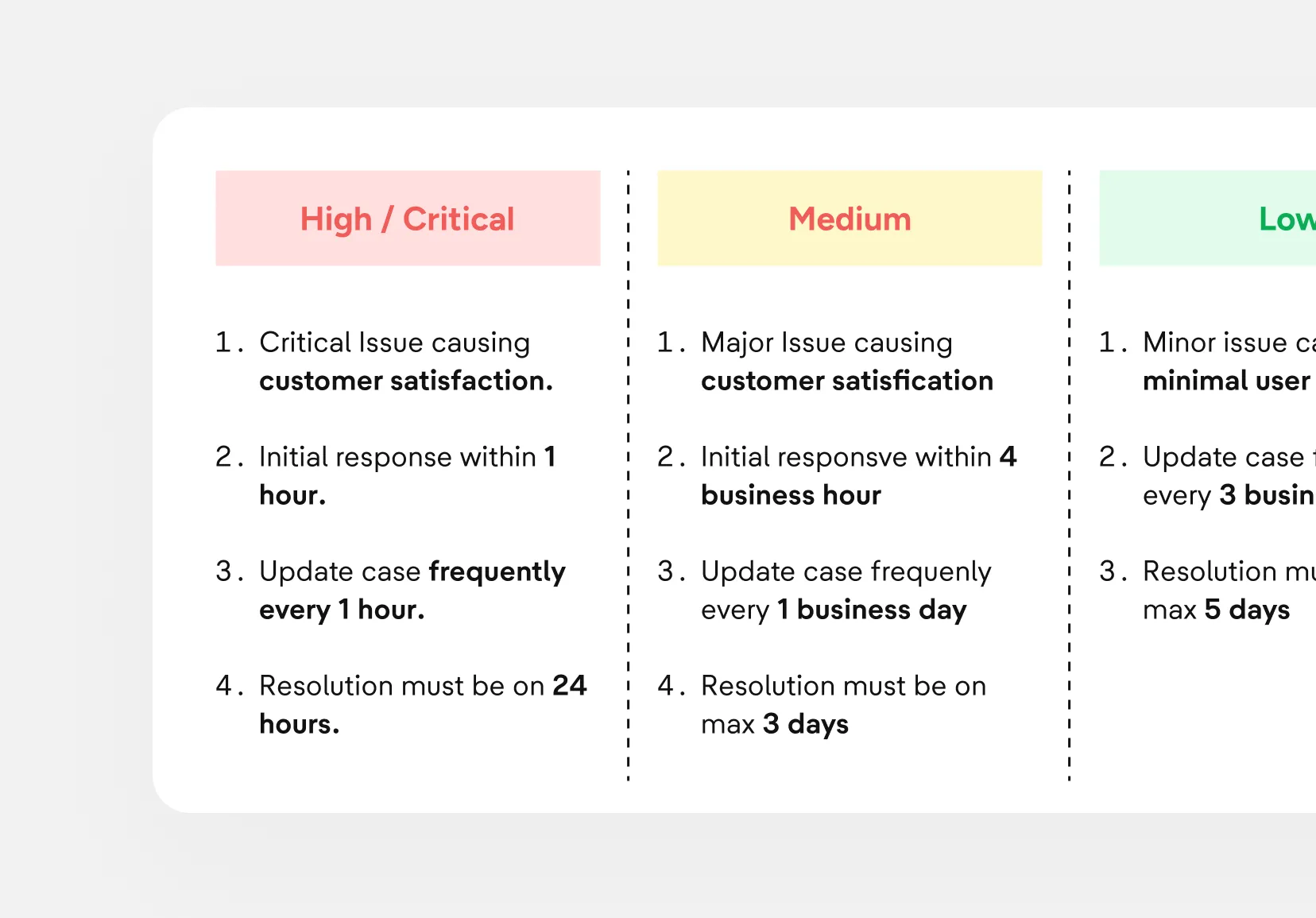
1st: Define the Urgency Level
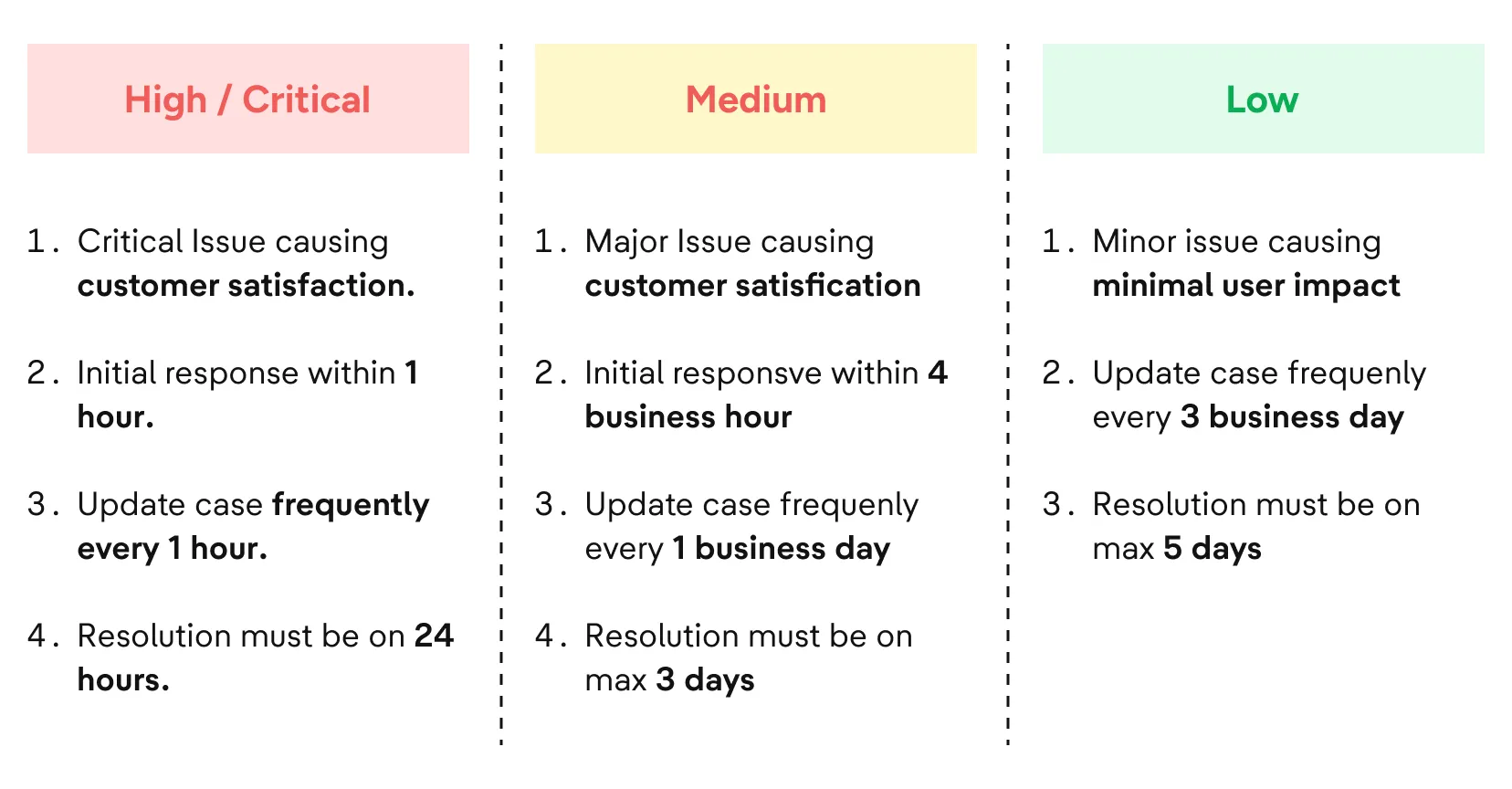
This is how we need to set the urgency leveling in CS, currently we don’t have urgency level mechamism on tiket.com
2nd: Define The Handling Model & Responsibility
To create a more effective support experience, the handling responsibility is divided into two models based on user needs and case complexity:
- Product Model
Focuses on self-service support that helps users solve problems independently through Chatbot, WhatsApp Chatbot, and Help Center. - Human Model
Reserved for human-assisted support for more complex or sensitive cases through Customer Service channels such as Social Media, Email, WhatsApp Chat, and Call Center.
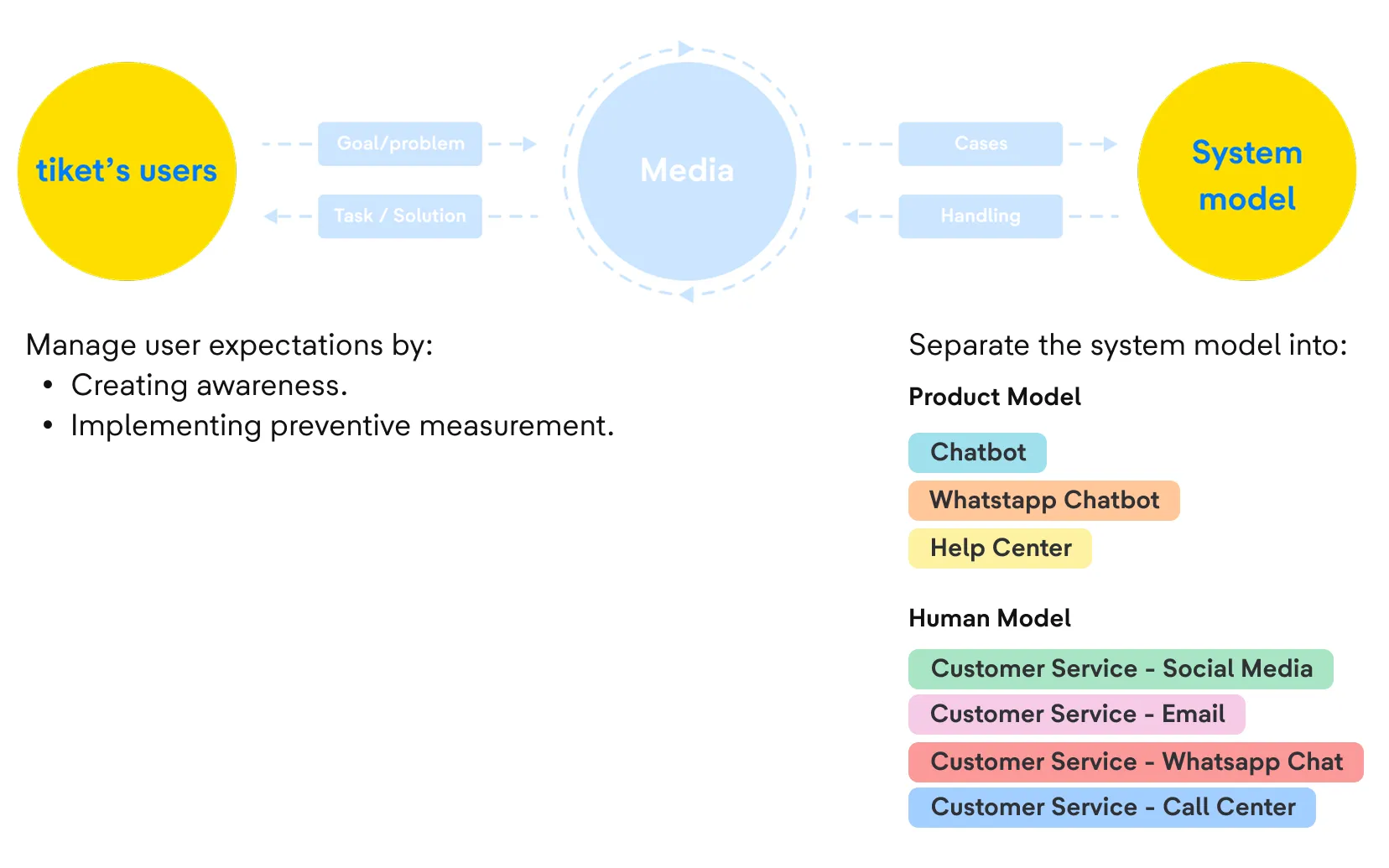
This is our new approach from both the user and system model perspectives.
3rd: Combine Between Urgency Level & Handling Responsibility
This is how the Human Model and Product Model handle complaints, requests, and inquiries within our system model.
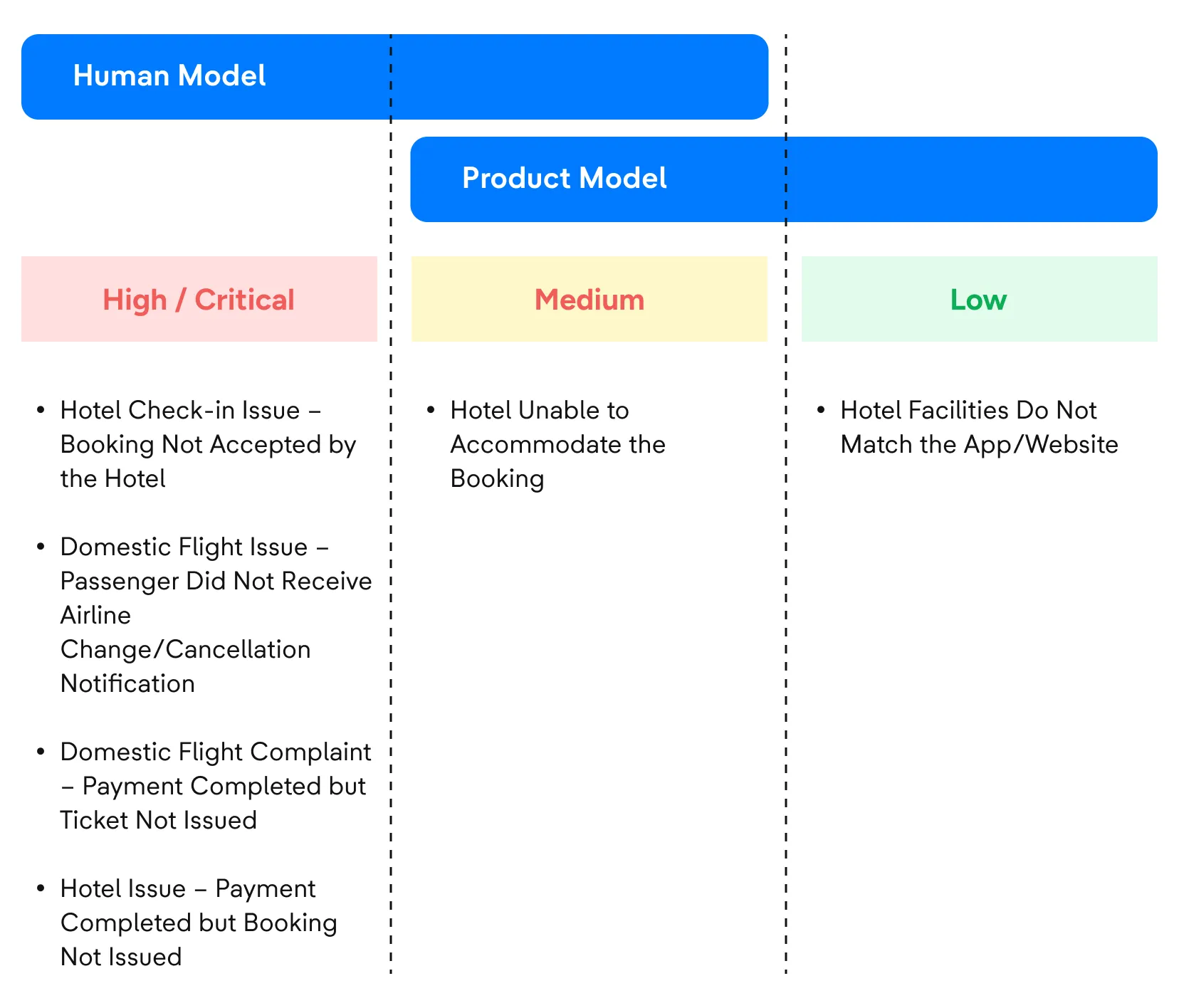
Example Implementation for Hotel & Flight Cases
Example Implementation
This is example implementation on High / Critical Case
Case: Hotel Check-in Issue – Booking Not Accepted by Hotel
Detail case:
- User is unable to check in at the hotel.
- User submits a complaint directly to tiket.com while at the hotel location.
- During peak season, the hotel sold the room to on-the-spot guests.
- The hotel failed to inform tiket.com that the room inventory was already sold out.
Urgency Level:
- High / Critical
- Handling by Human Model
Preventive Handling
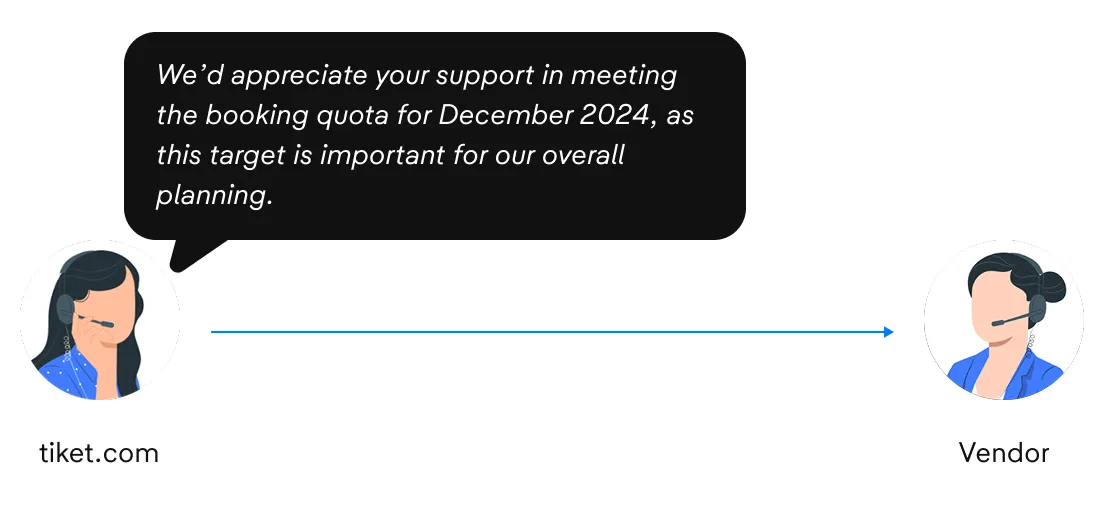
Before the peak season, the new standard operating procedure is: “To confirm with the hotel one month in advance to fill the booking quota.”
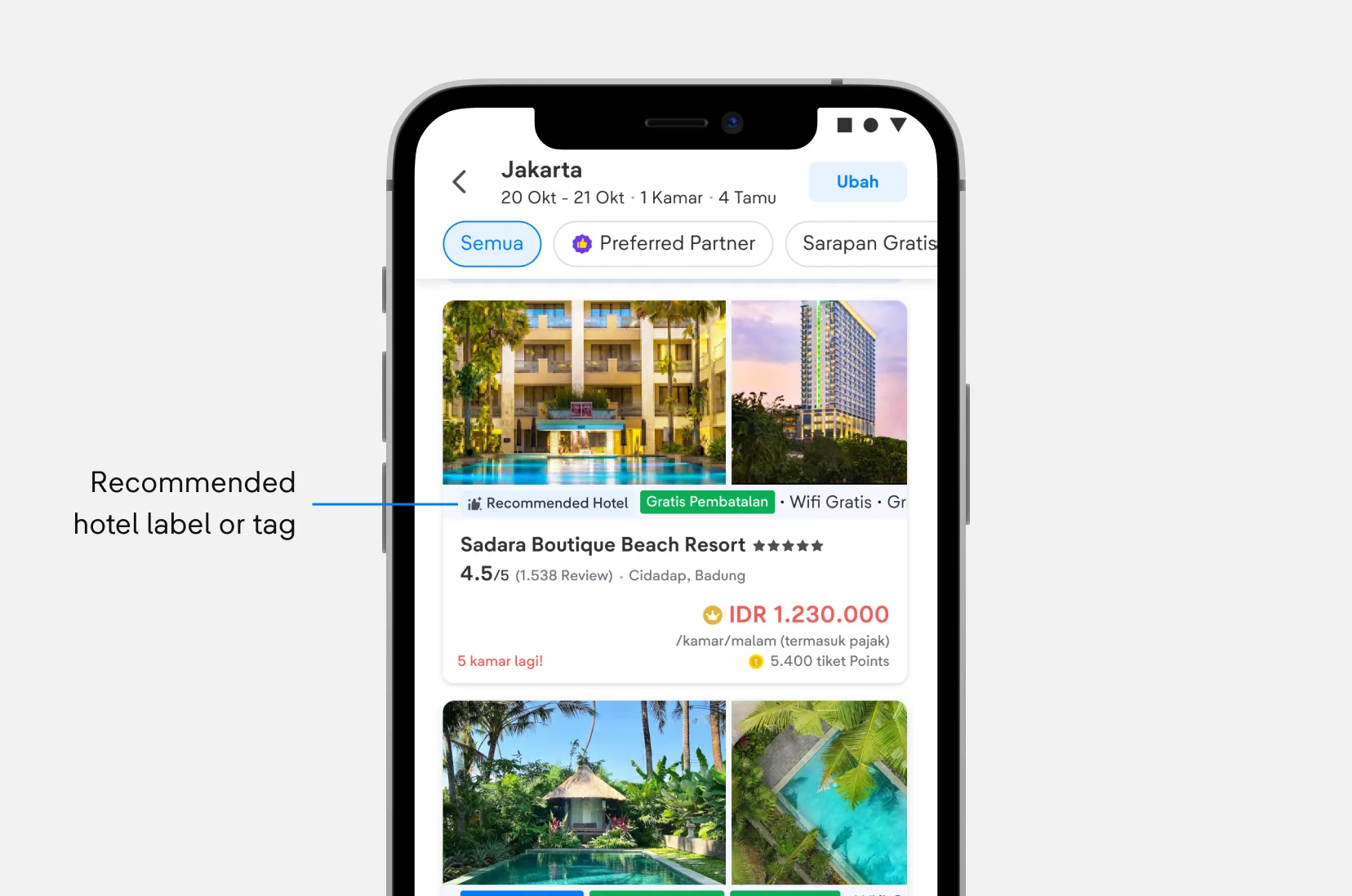
Increase awareness when customers make a hotel booking by creating a “Recommended” label or tag.
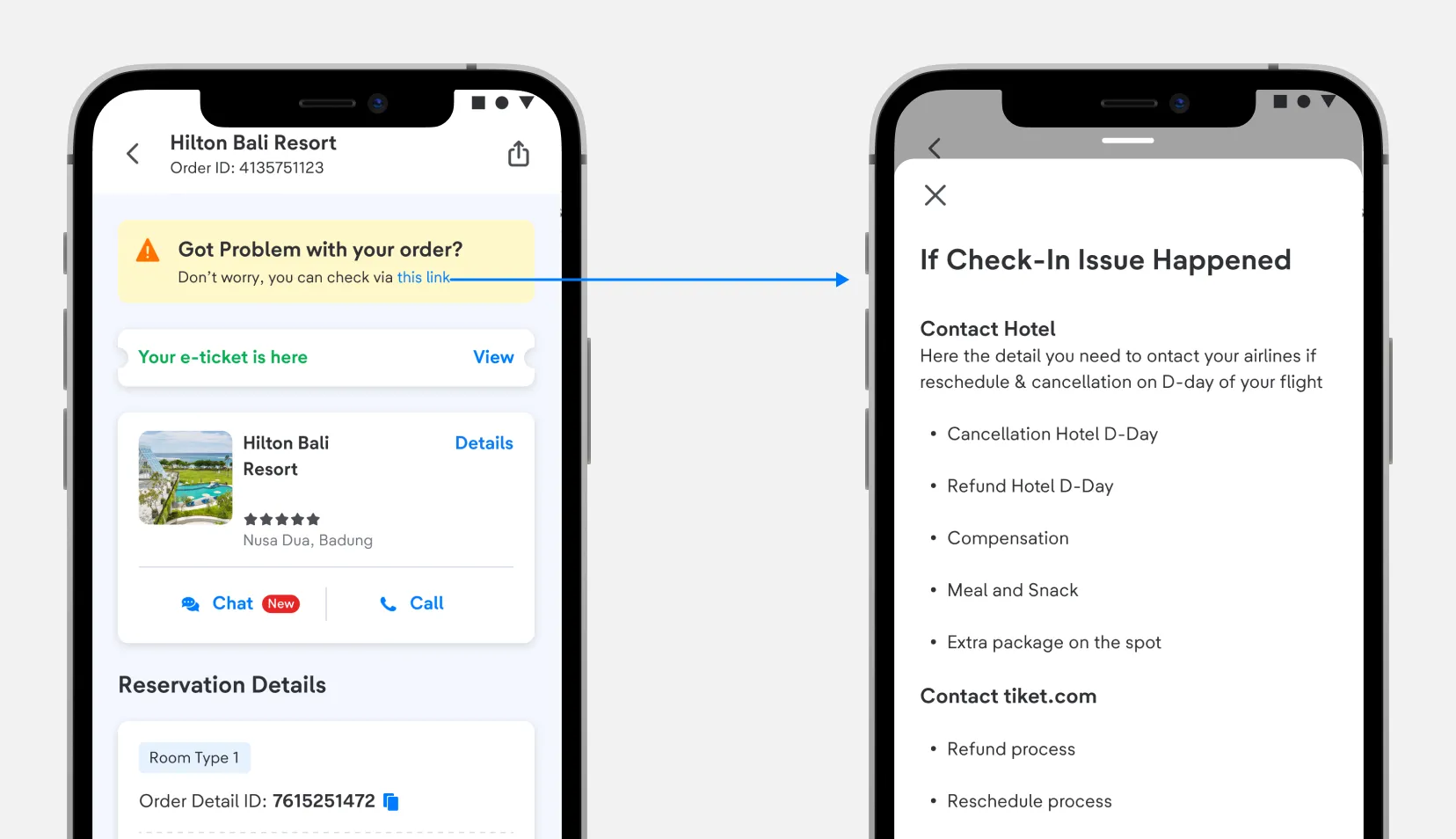
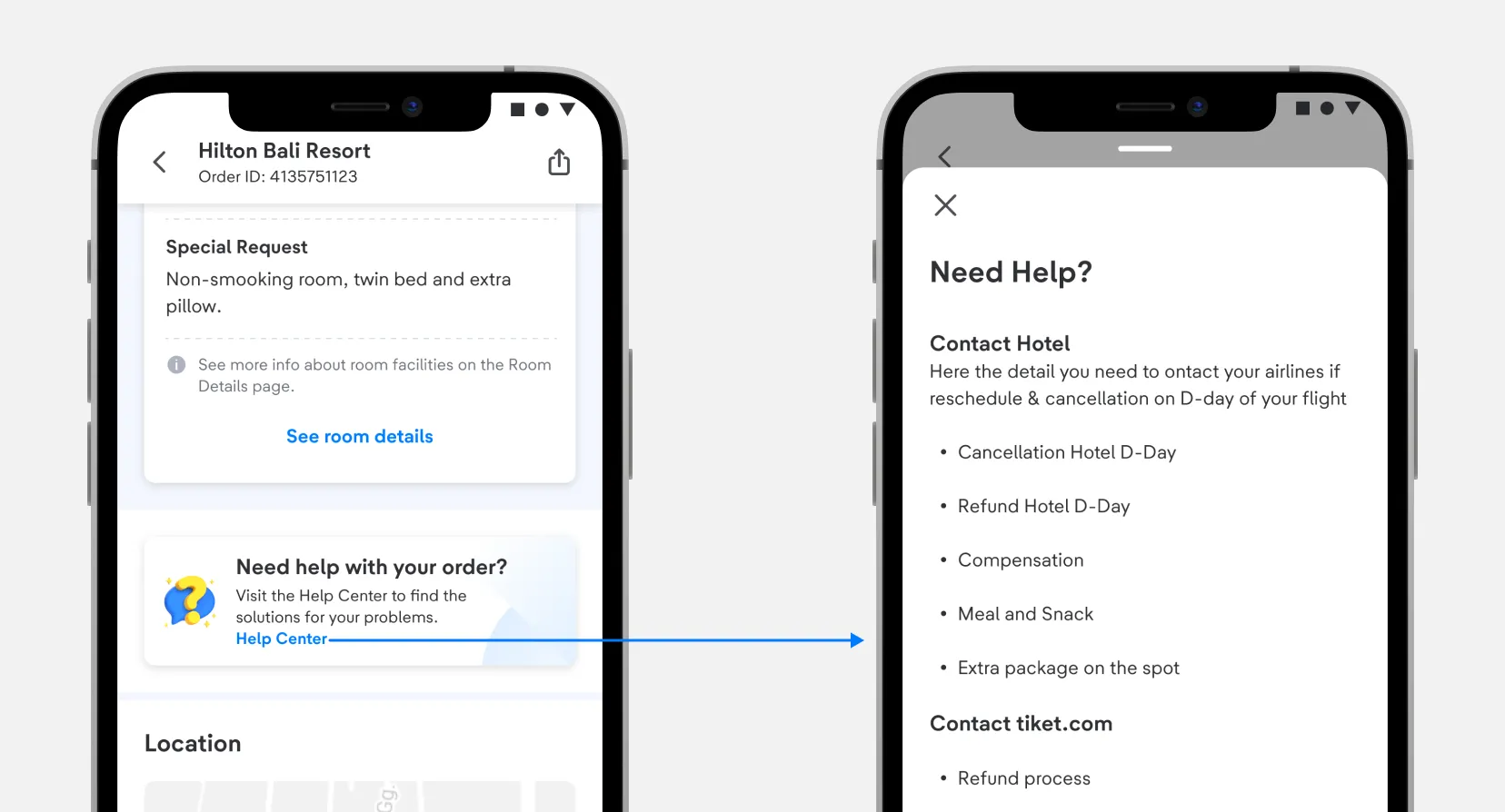
Add extra info in the order details, so customers are aware of check-in issues. Include a link to an article or contact CS.
Corrective Handling
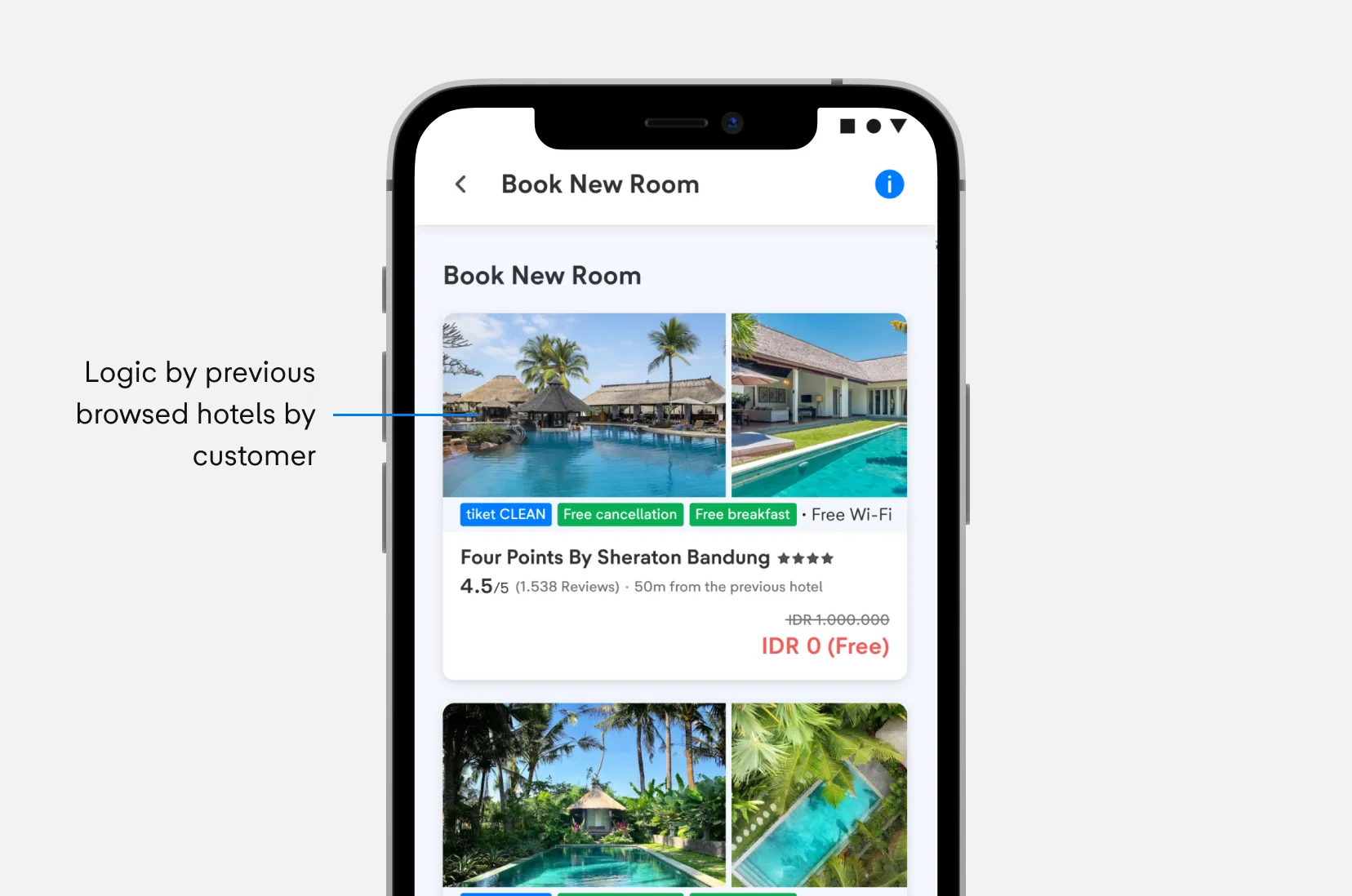
For relocation, tiket.com should match hotels by class, location, and facilities. This way, if users need to be relocated.
It’s like predicting which hotels users might have considered before booking Hotel X.
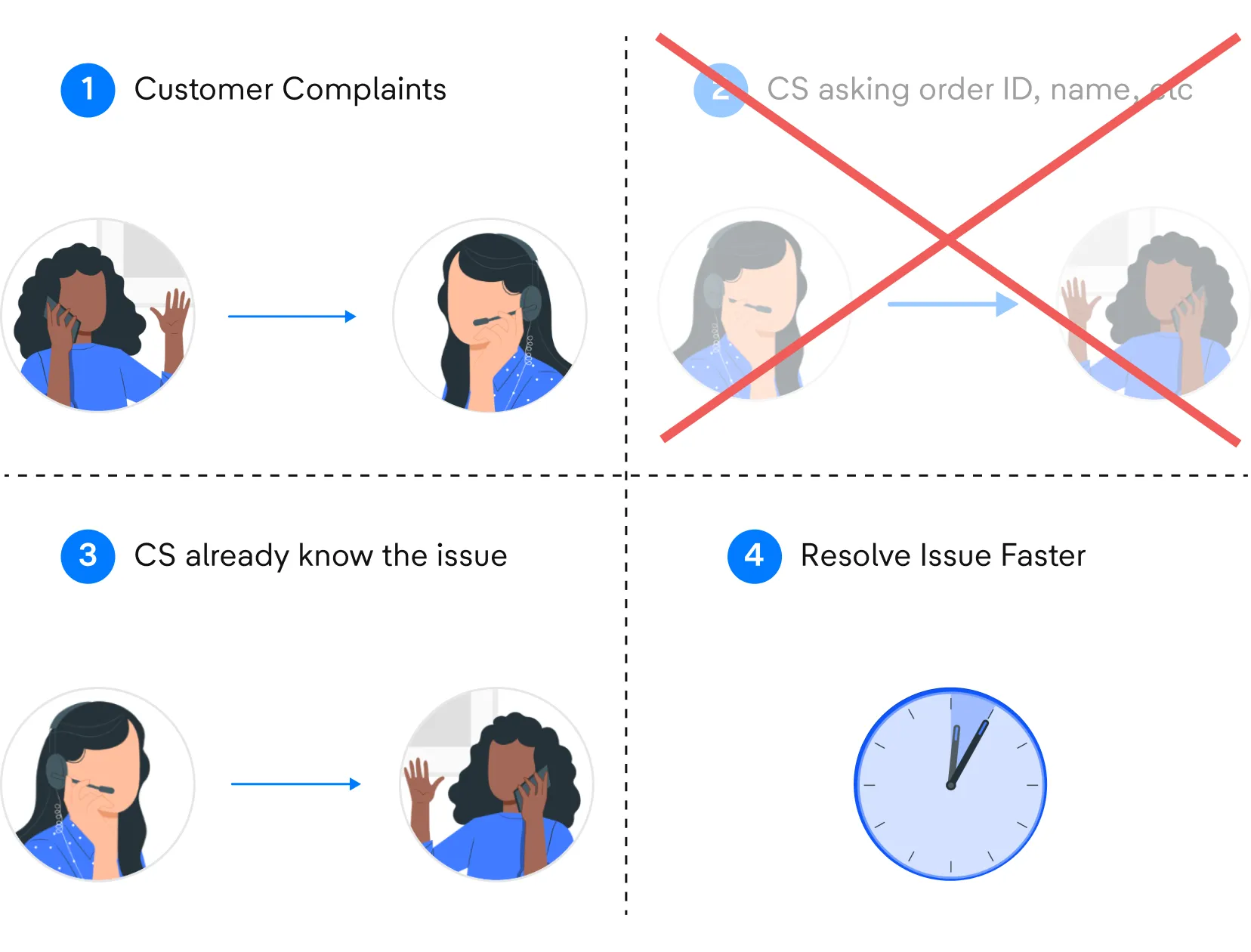
Bypass the standard Customer Service SOP for urgent cases by eliminating repetitive verification steps (such as asking for Order ID and customer details) through automatic backend attachment of customer information, enabling faster response times and a more seamless support experience during high-priority situations.
Example Implementation
This is example implementation on High / Critical Case & Medium Case
Case: Flight (Domestic), User Did Not Receive Reschedule or Cancellation Information from Airline
Detail case:
- Users panic when airlines suddenly cancel or reschedule flights happening on D-Day flights.
- Users get confused when airlines cancel or reschedule flights for non D-Day flights.
- Around 60% of cases come from Lion Group airlines (Lion Air, Batik Air, and Wings Air).
- At some cases, CS tiket.com Customer Service is also delayed in receiving cancellation or reschedule information because the airline system update is sometimes not synchronized in real time.
Urgency Level:
- High / Critical (for D-Day Flight)
- Medium (for non D-Day Flight)
- Handling by Human Model (for D-Day Flight)
- Handling by Product Model (for non D-Day Hotel & Flight)
Preventive Handling
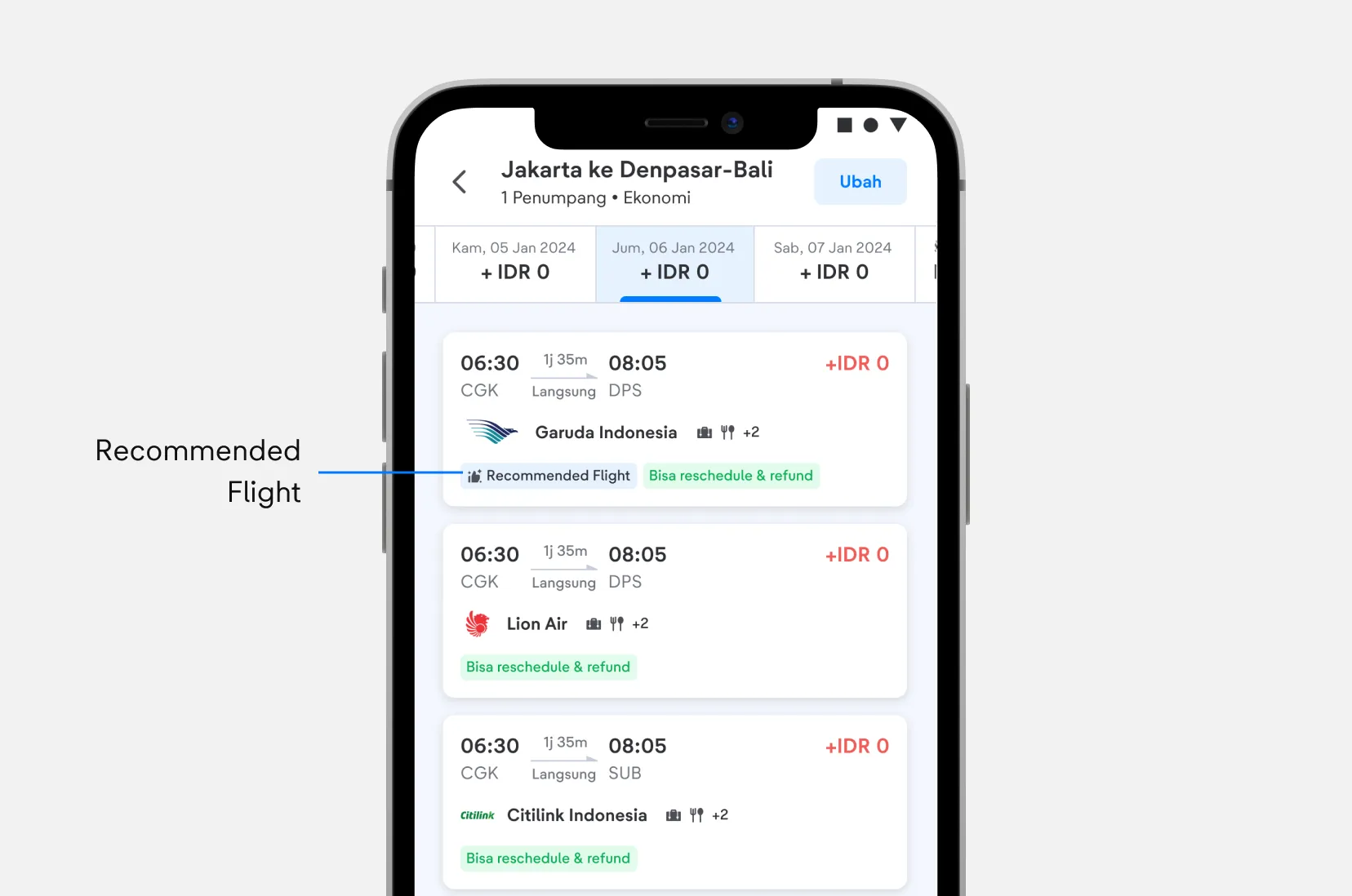
Increase awareness when customers make a flight booking by creating a “Recommended” label or tag.
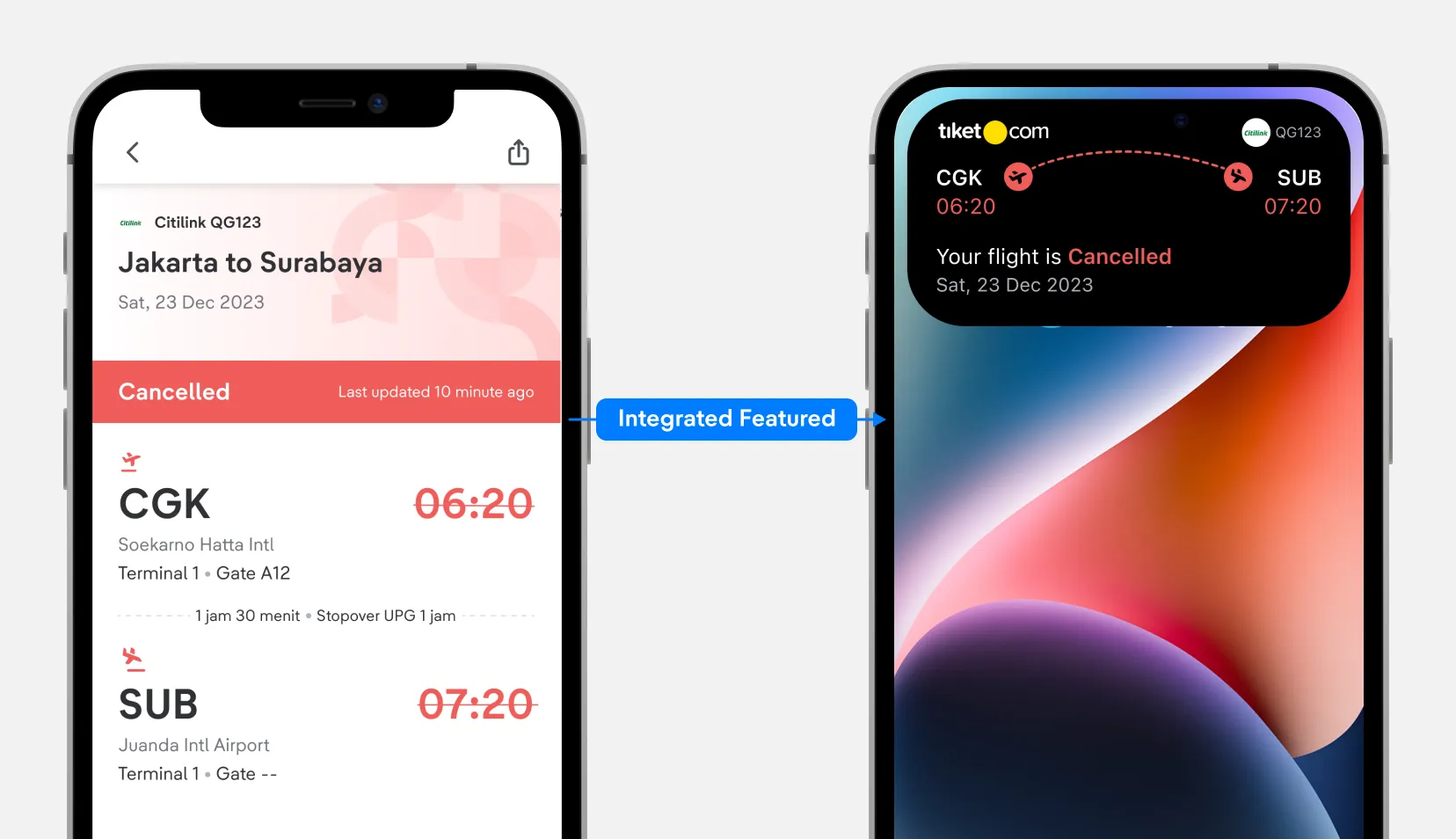
Connect flight status on the app with live activity to get real-time notifications. These will appear 8 hours before the flight and give clear indication for customers.
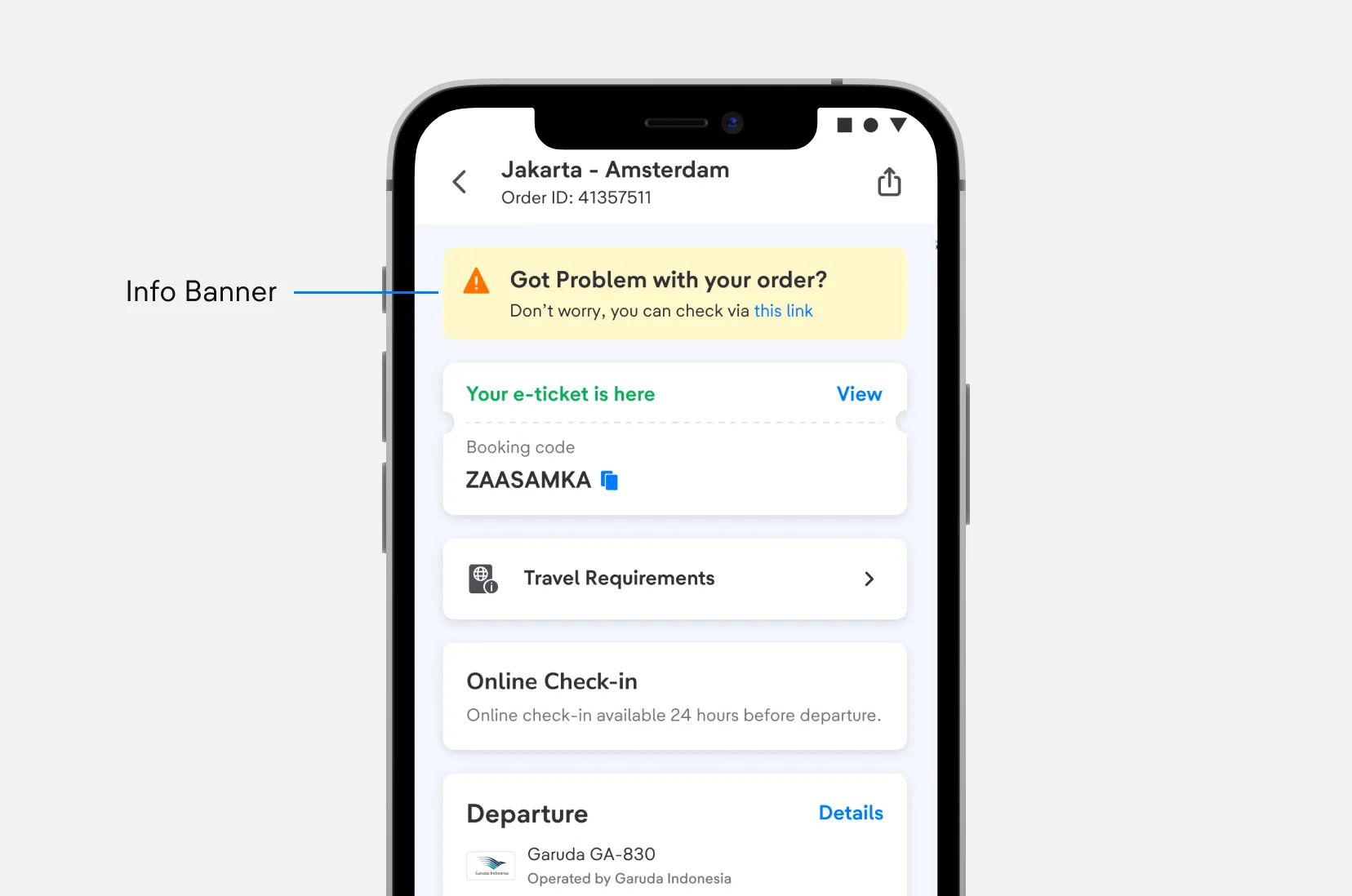
Add extra information to the order details so customers are aware of check-in issues. Include a link to an article or contact customer service.
Corrective Handling
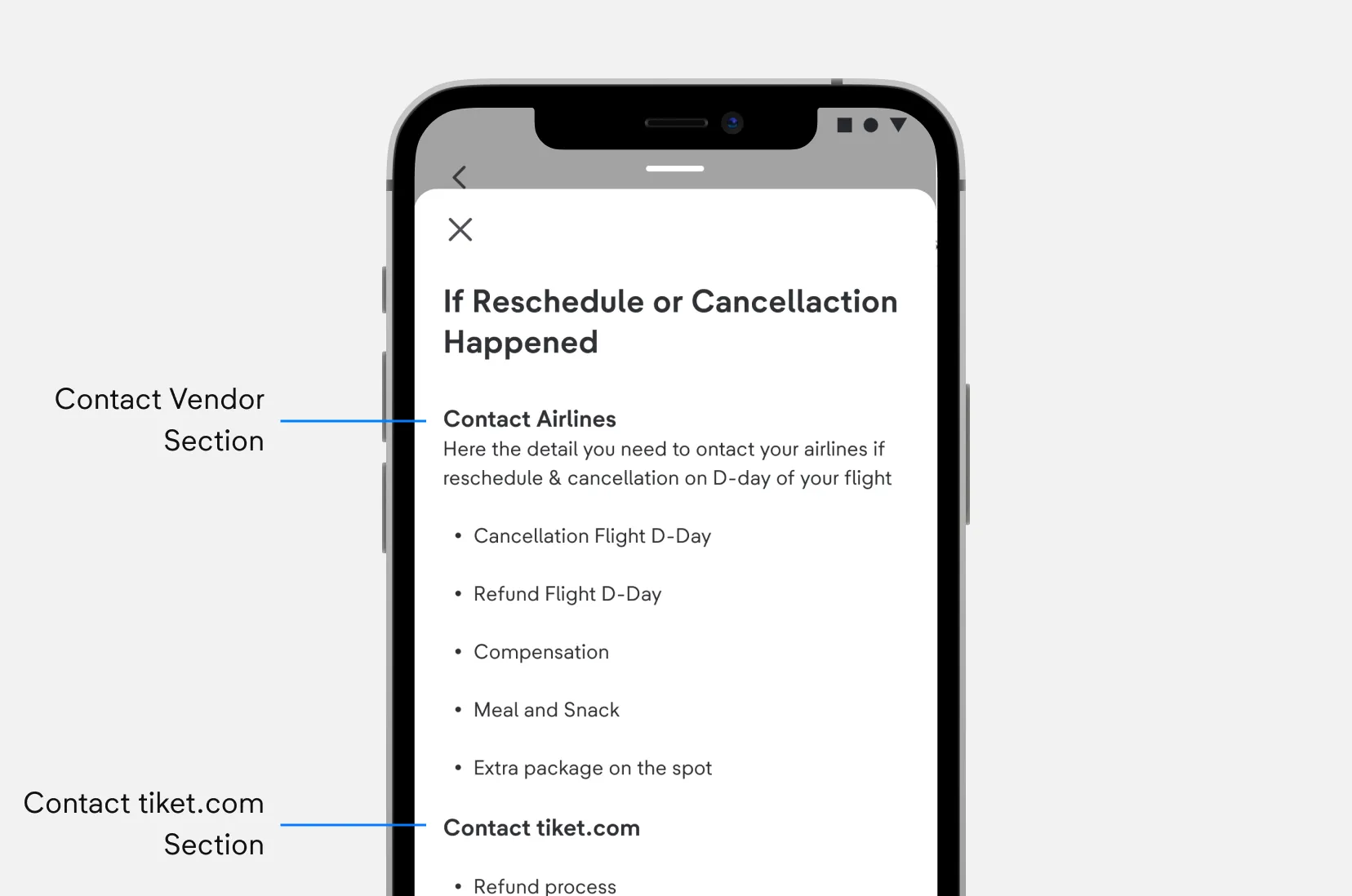
Provide clear information in the article on when customers should complain to tiket.com or the airlines if they face check-in issues.
Bypass the standard Customer Service SOP for urgent cases by eliminating repetitive verification steps (such as asking for Order ID and customer details) through automatic backend attachment of customer information, enabling faster response times and a more seamless support experience during high-priority situations.
Example Implementation
Example Implementation on Low Level Case
Case: Hotel Facilities Do Not Match the Information on App / Website
Case Detail:
- Hotels do not regularly update their latest facility information to tiket.com.
- tiket.com may also experience delays in updating the latest hotel information and facilities.
- Users feel disappointed when the facilities or benefits received do not match their expectations.
- Most complaints are related to hotel conditions such as AC issues, dirty rooms, or unavailable facilities.
Urgency Level:
- Low
- Completely handling by Product Model
Preventive Handling
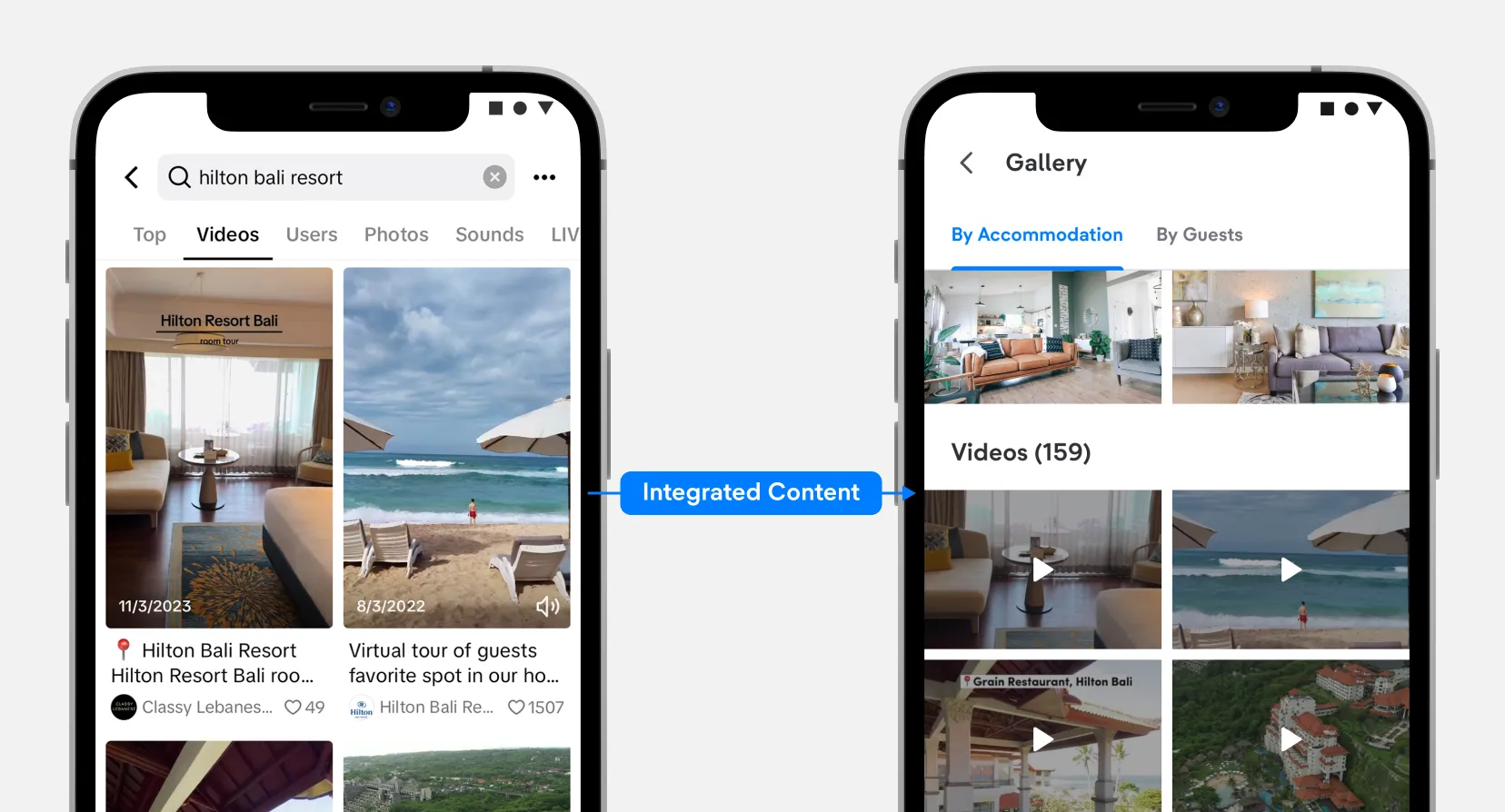
Create a short video similar to those on TikTok, as it’s highly relevant today due to increased internet speeds and lower data costs. Adding short videos is not an issue.
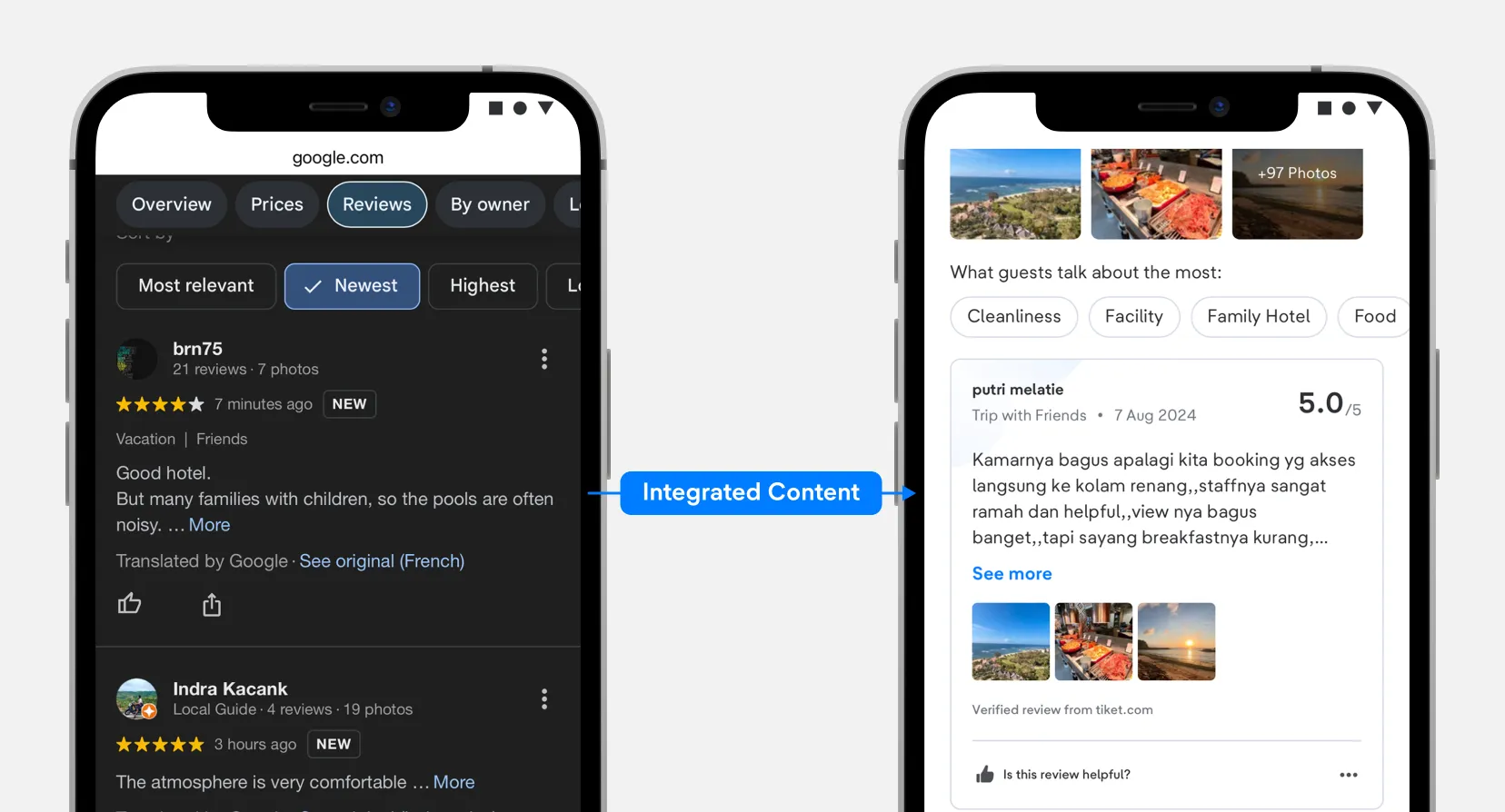
Integrate reviews from free sources like Google Reviews to minimize user complaints and ensure that the hotel always meets expectations upon arrival.
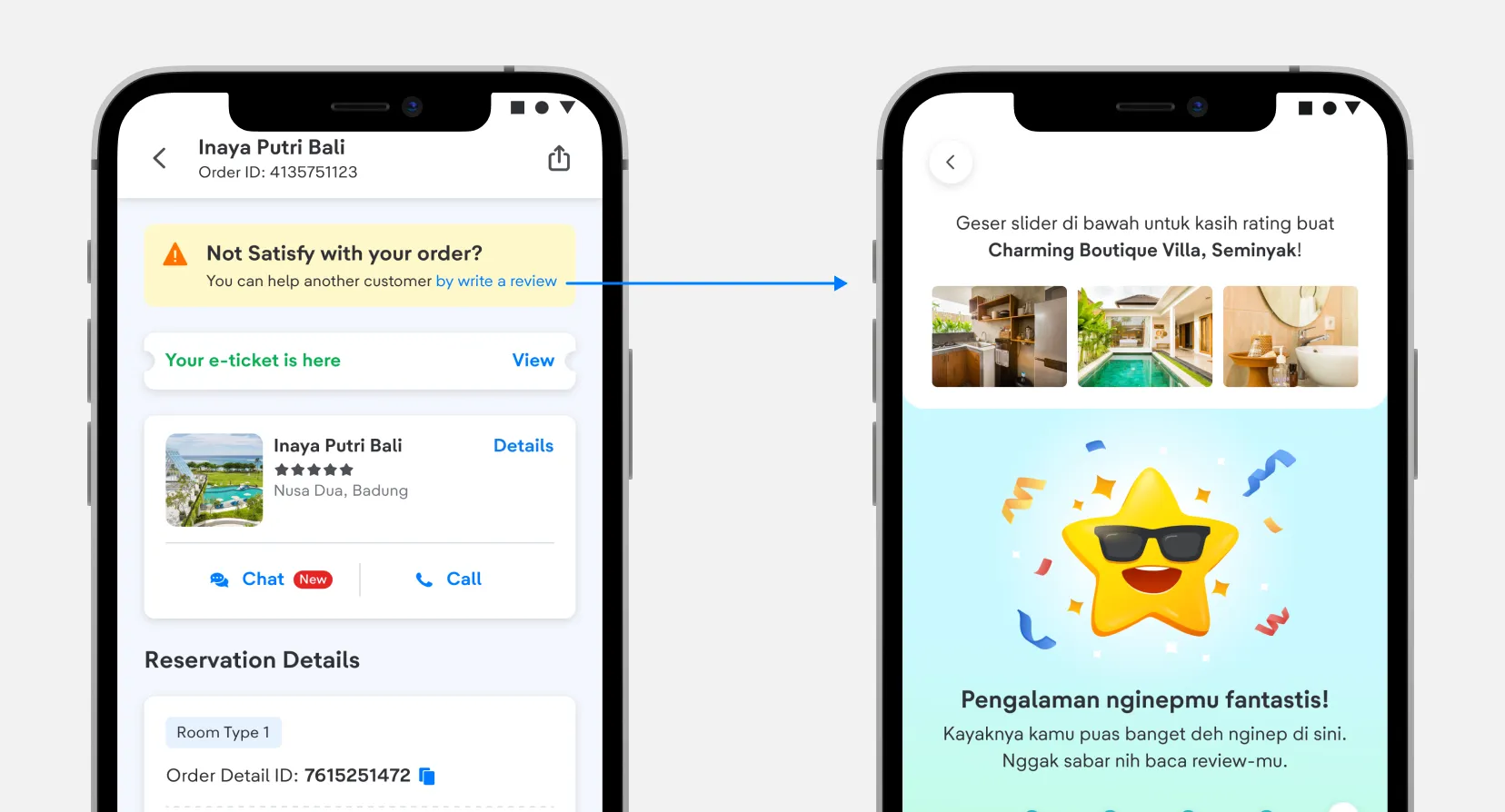
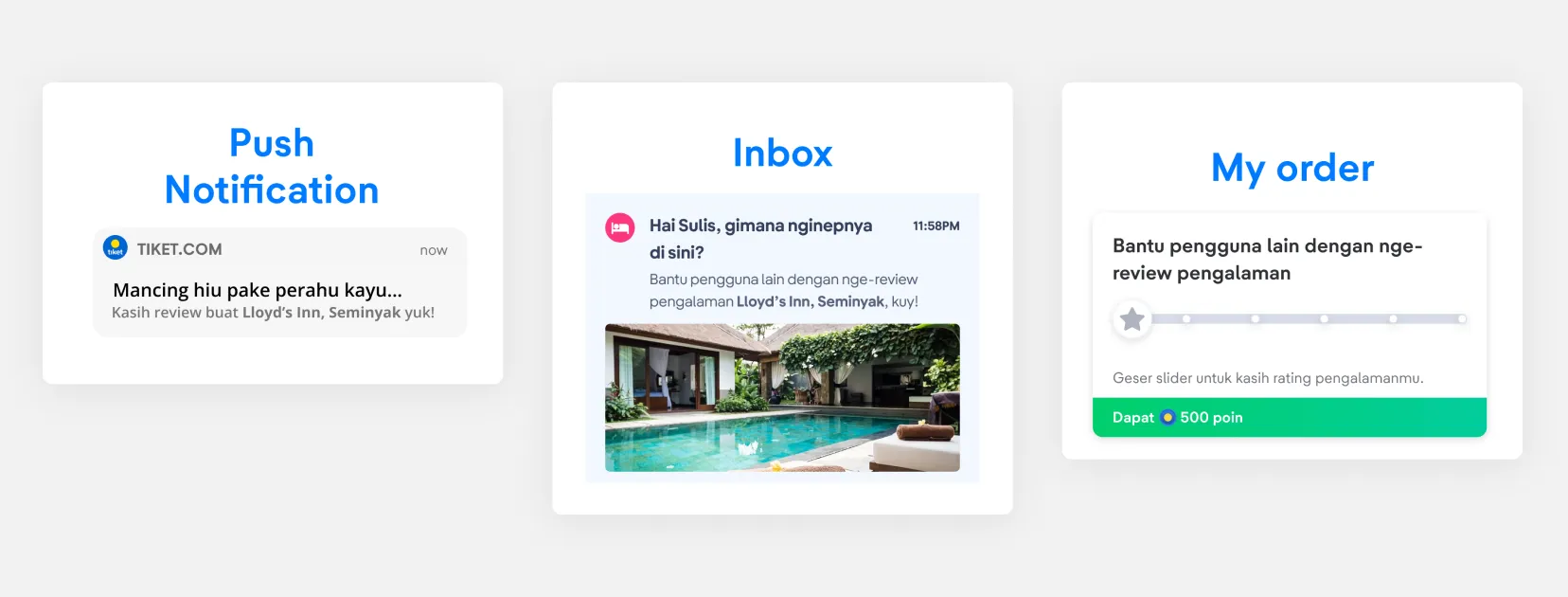
Ask customers to leave a review to help other customers via multi-channel exposure: push notification, inbox, & order.
Provide an article before customers visit our help center or contact customer service so they know to whom to raise their issues with.
Closing Thoughts
We now have a clearer understanding of what Customer Disruption Management Handling should look like. At its core, it is about balancing two perspectives: the customer and the business.
On one side, we reduce uncertainty by guiding customers through disruptions with clear, timely, and reliable information—helping maintain trust and confidence. On the other, we improve operational efficiency by structuring how complaints, requests, and inquiries are handled across the system.
By aligning these two sides, Customer Disruption Management Handling evolves from a reactive support function into a scalable system that drives measurable impact—reducing support dependency, improving resolution time, and lowering operational costs, while increasing customer satisfaction and long-term retention.